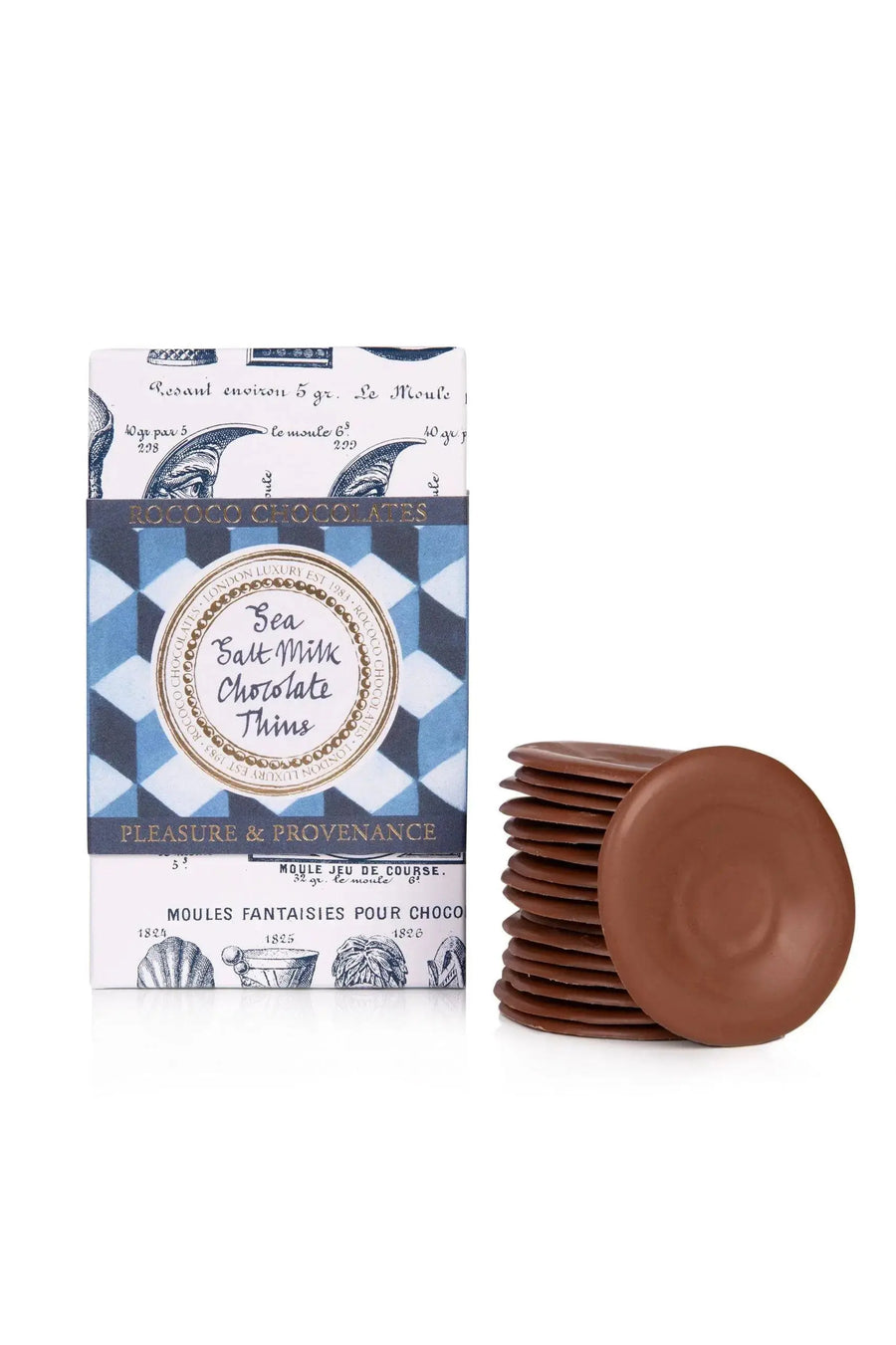
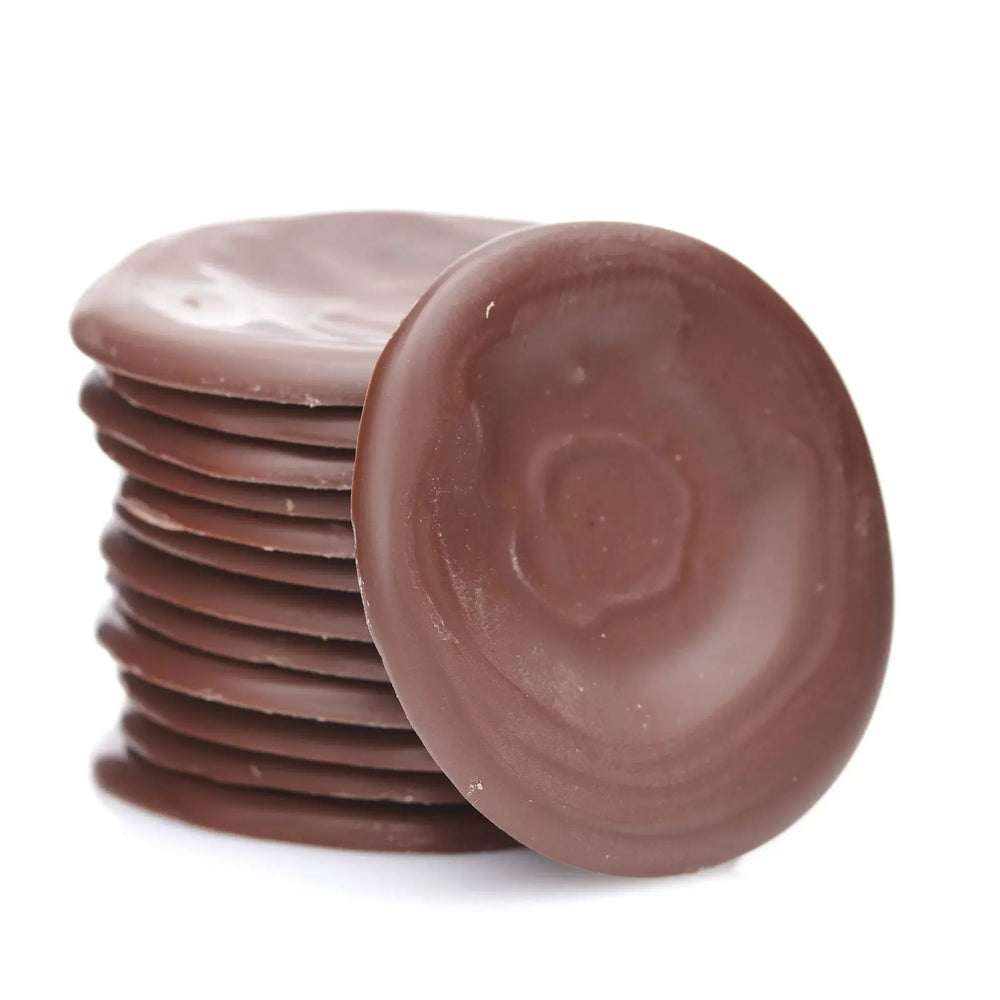
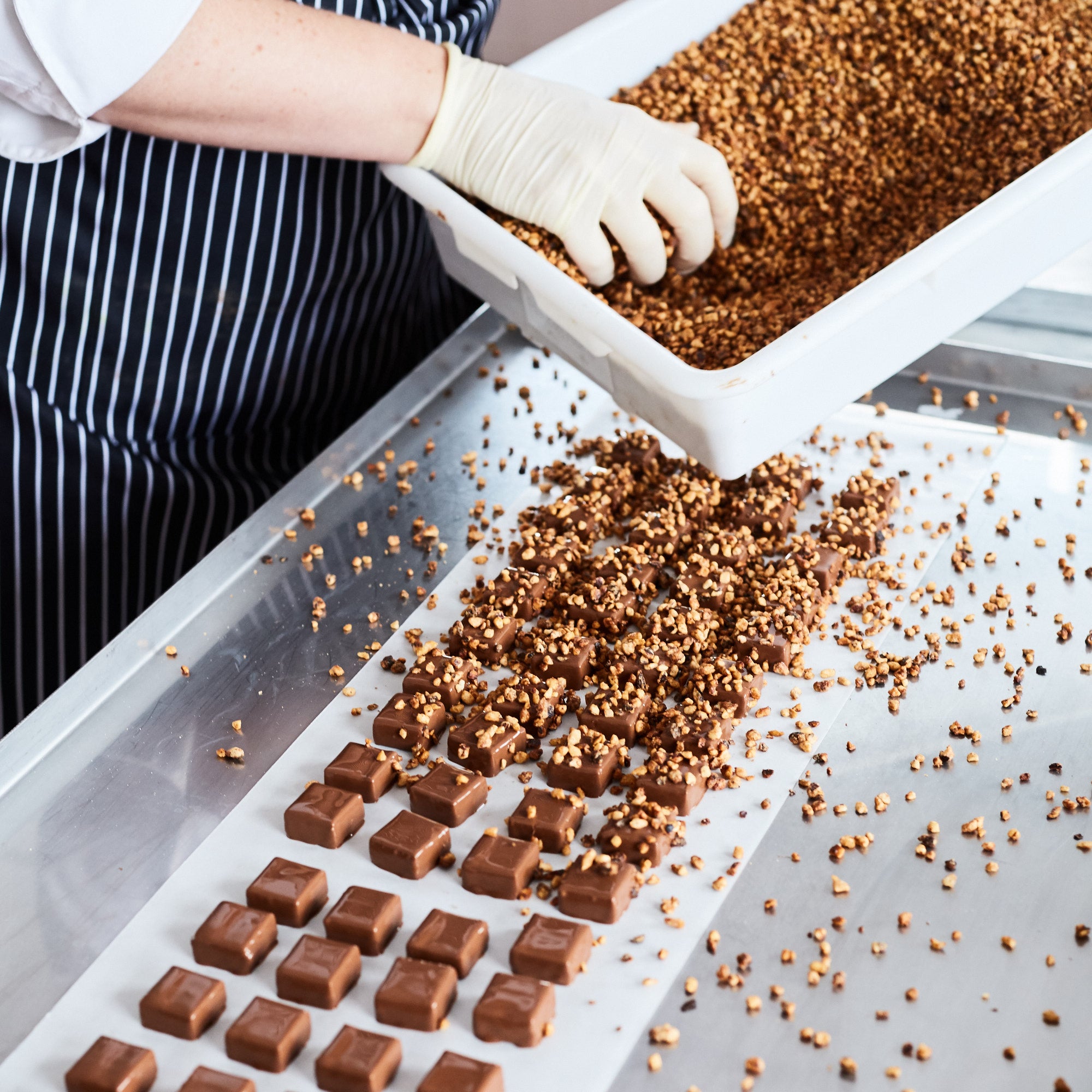
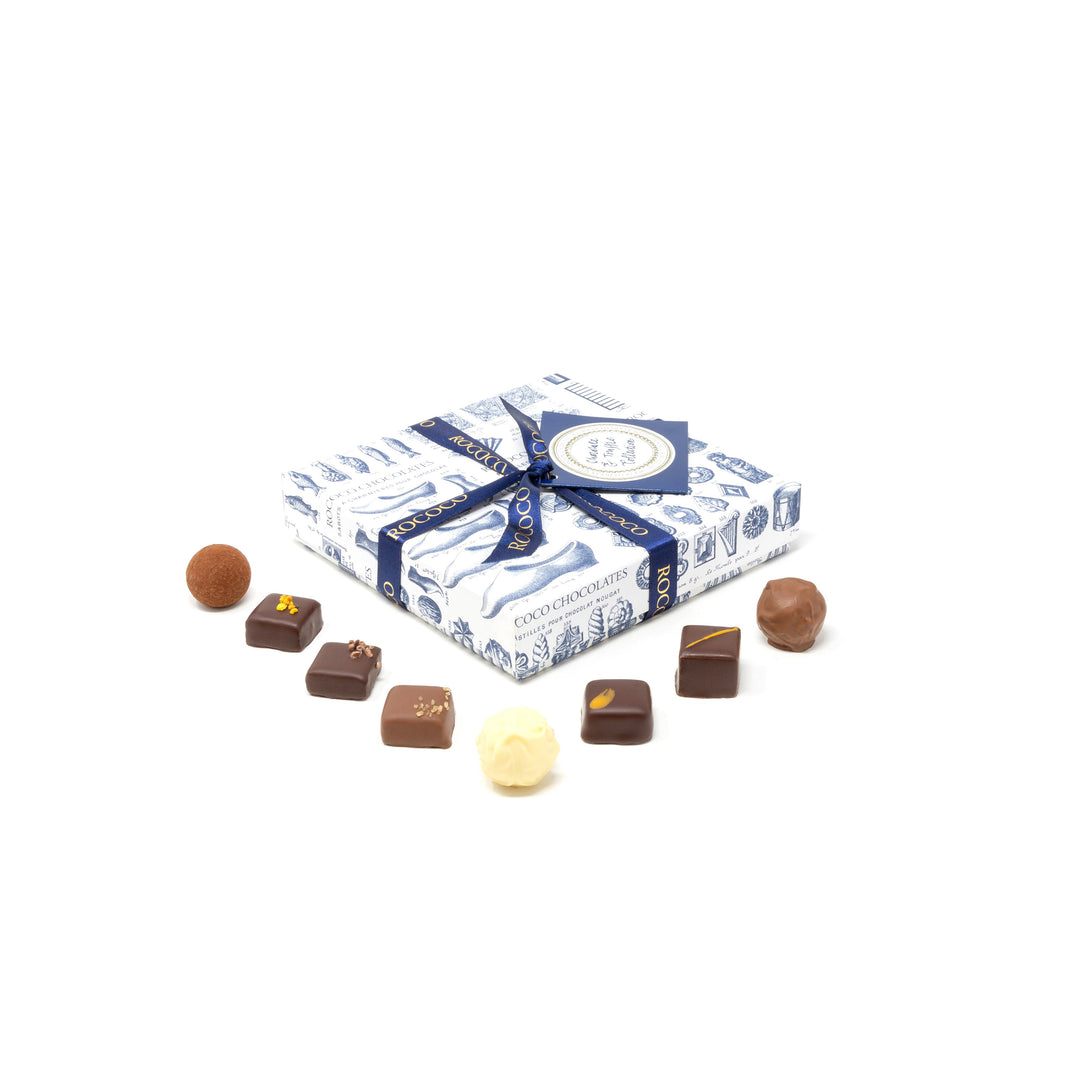
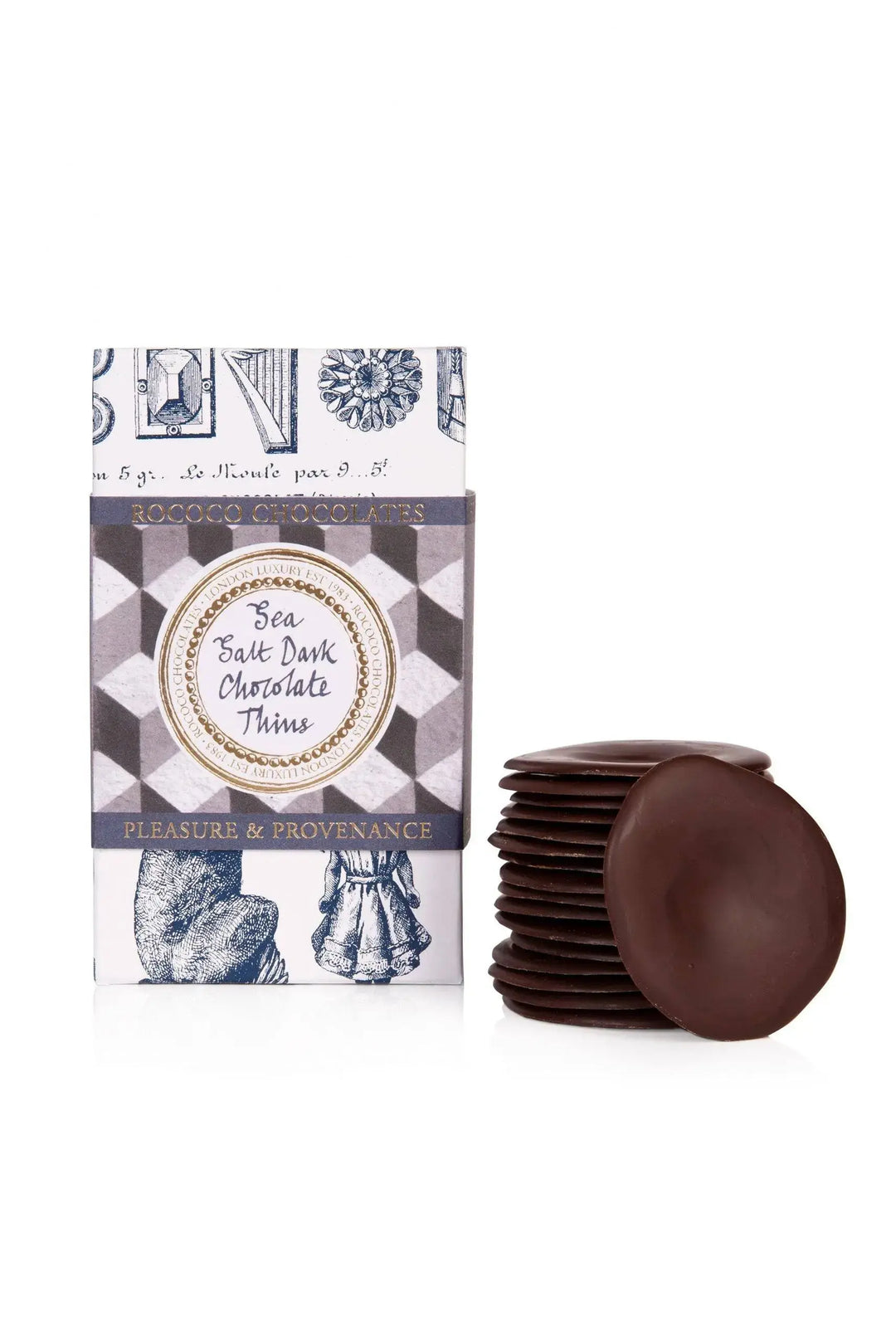
Who’d have thought luxury chocolate could be so reasonably priced? If you need a luxury gift item that won’t break the bank, Rococo has chocolate gifts to suit every type of occasion – and budget.

via Gift Ideas For Less Than £10 – Gifts Under £10 Rococo Chocolates.

Map powered by MapPress

Academy of Chocolate Conference

Book now

9am – 6pm Friday 8th October 2010

The Royal Automobile Club, Pall Mall, London

Featuring leaders in the chocolate industry:

  • Tony Lass MBE formerly head of research on cocoa for Cadbury’s
  • Craig Sams of Green & Blacks
  • Chantal Coady of Rococo
  • Sara Jayne Stanes OBE, Author of Chocolate The Definitive Guide
  • Angus Thirlwell of Hotel Chocolat
  • Anne Weyns of Artisan du Chocolat
  • William Curley
  • Paul a Young
  • Keith Hurdman of Thornton’s
  • Chloe Doutre-Roussel
  • Martin Christy of Seventypercent.com

The Academy of Chocolate conference is aimed at all levels of knowledge, whether you already have a chocolate business, are starting a chocolate company or are interested in learning more this one day event will appeal. With talks on sustainability, cacao genetics, cacao as a commodity, chocolate tastings, creating flavour combinations, the future of the chocolate industry, fairtrade, chocolate producers and much more. Places at the conference are limited. The cost is £100 per person which includes a full day of conferences, lunch and refreshments. If you wish to book please complete the booking form here. and return with a cheque to:

Kate Johns, Academy of Chocolate, 50 Gleneagle Road, London SW16 6AF For a full timetable of events please contact kate@nudgepr.co.uk

via Upcoming events.

On 10 June, the revised range Rh to rococoesque was added to the Dictionary, along with new entries across the alphabet.

via Oxford English Dictionary: The definitive record of the English language.

Possessing the characteristic of the rococo style, a style with asymmetrical forms and elaborate decoration. Although “rococo” itself is already an adjective, in order to emphasize the characteristics of the style, and perhaps to use a French adjective ending to enhance the artistic meaning, the -esque suffix is appended to the word. Since “rococo” itself came from the French language, the derivation is very natural.

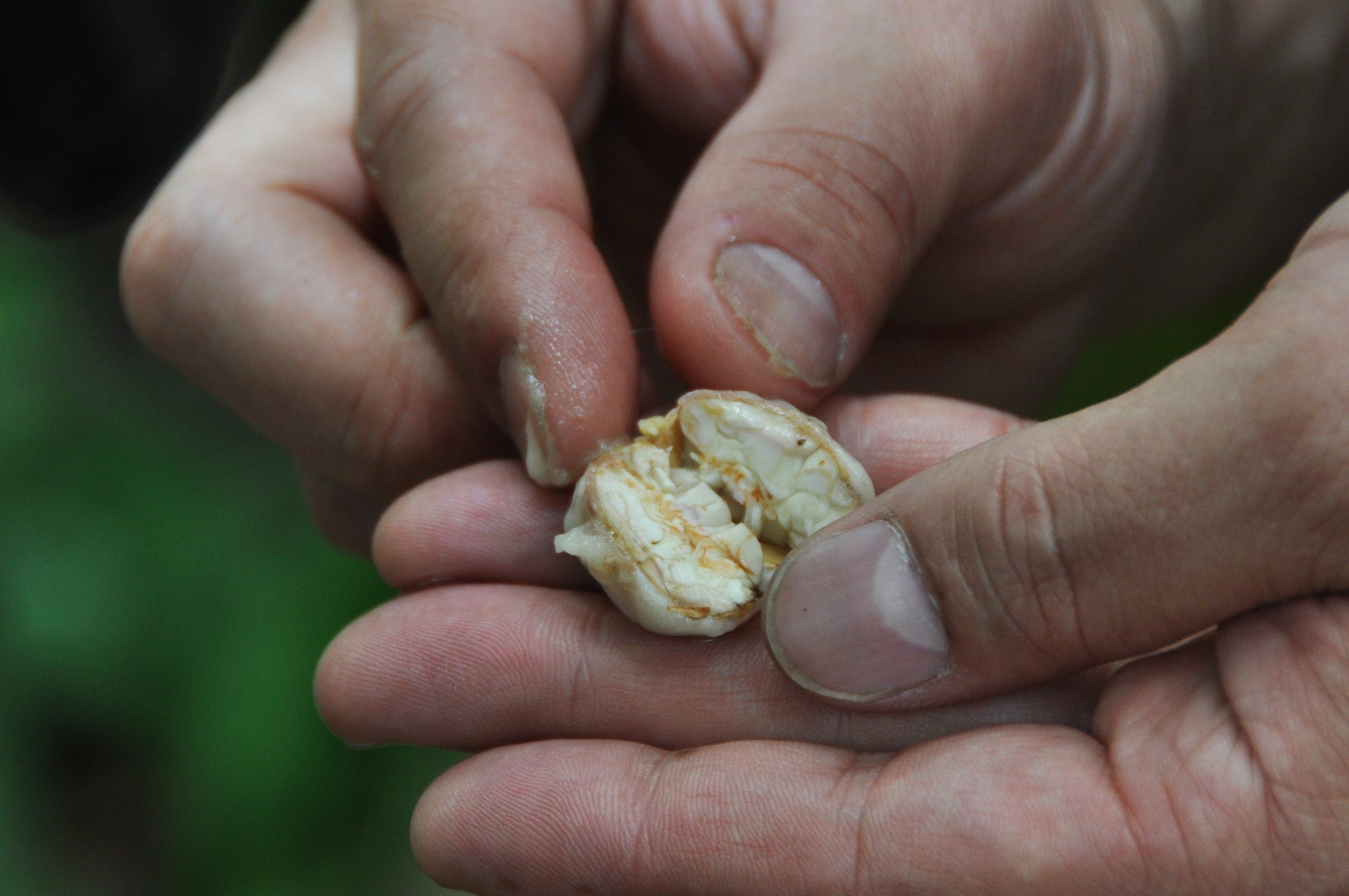
Theobroma cacao is indigenous to Central America as it falls in the cocoa belt which is an area where the chocolate tree prefers to grow and flourish. The cocoa belt falls exactly twenty degrees both north and south of the equator. Theobroma cacao can grow in other areas, but it will not flower. No flowers mean no cocoa pods. It is believed that the cacao has been grown in the country of Belize for over 3,000 years. Actual farming began in the year 250 BCE. Today, cacao is still grown by the Mayan Indians (yes there are still Mayan Indians) in the Toledo area of Belize. Interestingly enough, Hershey’s, a United States company, is working with them along with the United States government for commercial export.

Green and Black’s, a company of the United Kingdom, was the first to export organic cocoa out of the Belize in 1992. It was the first Free Trade commodity in the United Kingdom. Green and Black’s sold the cocoa under the label of Mayan Black. Since then the growth of cacao has diminished due to lack of government subsidies for cacao, high-cost production, improvement of job opportunities in other sectors and the damage from Hurricane Iris in 2001 that virtually wiped out Theobroma cacao.

Another country producing substantial amounts of cacao was Costa Rica. Theobroma cacao was brought to Costa Rica in the 1800s by the Jamaicans who were working on the railroads and were already successfully growing cacao. Costa Rica already had large crops of banana trees which were perfect cover trees for the Theobroma cacao as the cacao likes to be shaded from direct sunlight. The cacao plantations thrived and cacao farmers prospered. In the 1960s, pod rot hit the entire country of Costa Rica resulting in the loss of 95% of the country’s cacao.

From the 16th century through the end of World War I, the farming of Theobroma cacao was dominant in the Caribbean islands. During this time, the islands producing the most cacao were Jamaica, Trinidad and the Windward Islands which include Dominica, Martinique, Saint Lucia, Saint Vincent, the Grenadines and Grenada. After that time, West Africa took over as the leaders in cocoa production.

Theobroma cacao was introduced to the Caribbean islands by the Spanish in the early 16th century. The Spaniards brought the tree from Venezuela and records indicate that the first planting of Theobroma cacao was in Trinidad. There is a rumor that the British burned a ship to the ground in the late 16th century thinking the cocoa beans were sheep’s droppings. Oops! At the turn of the 17th century, Spanish physicians noted the medicinal qualities present in chocolate, many of which are still valid for dark chocolate today, and chocolate as medicine was brought into England. Cocoa demand increased.

Venezuela was the largest producer of cacao in the 18th century. The Caribbean began to increase cacao in both the amount of trees they were growing as well as the amount of cocoa beans they were exporting. Spain tried to prohibit the export of the Venezuelan raw cocoa beans to create a monopoly. From 1728 through 1780, they succeeded. A group of Spanish noblemen controlled the entire Venezuelan crop of cocoa. Cocoa started coming from the Caribbean and other countries, mostly illegally, during this time. Privateers flourished in these years basically taking over control of the cocoa trade which some say lasted until the 18th century. Pirate ships were seen all over the Caribbean waters making a lucrative living bringing cocoa to Europe. A lot of the ships carrying cocoa were often either seized or burned to gain control of the cocoa trafficking. People wanted their cocoa!

More next week on the various Caribbean islands and their contribution to the world of Theobroma cacao.  Signing off for this week…

Annmarie Kostyk, Chocolate Goddess

Tags: ,

Chocolate Tom Yum

I’ve recently been running down my larder partly due to negligence but also in an attempt to increase the turnover of a few ingredients I bought in the wake of the Delia cheat craze. Today there was frozen spinach and beans, king prawns and lime leaves in the freezer. I added these to a litre of chicken stock and then some chilli sauce made earlier, tamarind for sharpness and dark chocolate to go with the extra dried chilli and “cooks cheats” shallots ginger & coriander, fish sauce and pressure cook for 3 minutes, add some noodles and coconut, bringing me terrifyingly close by accident to one “official” recipe:

  • 1 litre/2 pints chicken stock
  • 300ml/11fl oz water
  • 6 sticks lemongrass, lightly crushed
  • 4 fresh coriander roots, crushed
  • 110g/4oz fresh galangal, peeled and sliced (available from Asian supermarkets)
  • 8 tomatoes, cut into quarters, seeds removed
  • 6 kaffir lime leaves
  • 1-2 limes, juice only
  • 75ml/3fl oz tamarind water (tamarind is available from Asian supermarkets. Soak the tamarind in hot water and push the pulp through a sieve to make tamarind water.)
  • 3 red chillies, thinly sliced
  • 75ml/3fl oz fish sauce (nam pla), or to taste
  • 75g/3oz palm sugar (available from Asian supermarkets), use brown sugar if unavailable
  • 12 raw tiger prawns, shelled, gutted and split in half
  • 2 boneless skinless chicken breasts, cut into chunks

Tasting notes:

  1. It’s quite hard to get the right heat balance: adding just a small amount of coconut neutralised what started as a great heat from 3 dried chipotles.
  2. I’ll put some dried shitake in the larder in case I try this again
  3. I always forget how gloopy is creamed coconut – needs to be diluted in hot stock before tangling itself to noodles!

Usually I research and plan every second of a trip, but my over-preparedness annoys even me; there is no room for anything unexpected. So on my one free day I set out to shop, yoga, and browse, trying to be free-spirited, which I’m not. Marylebone High Street made it easy: Rococo chocolates which somehow didn’t make it home, Ortigia Bath Oil from Sicily is my new beauty obsession, Daunt Books, The Natural Kitchen for a juice, on to Zara Home, TriYoga, I was set. But I still had some time on my hands.

And then it happened. I was trying to get a peek inside the Royal Festival Hall and went around back. I saw the paparazzi waiting, they had to be there for someone, though Lindsay Lohan doesn’t live in London. Indeed, they were waiting for The Queen. Why not? I’ll wait too. Chocolate on the ground, I spoke to a cute couple from Australia. Snapped some shots of The Queen’s car. She walked out, so did Princess Anne, Prince Philip, and some other non-descript people with bad shoes.

via Martha McCully: Prince William & Me: My Run-In With Royalty.

Peppermint Hot Chocolate

Serves 4

Ingredients:

  • 1 1/2 cups heavy cream
  • 1 1/2 cups milk
  • 1/4 cup sugar
  • 1/8 teaspoon salt
  • 6 ounces dark chocolate, chopped
  • 3 drops peppermint oil

Directions:

  1. In a saucepan, combine the cream, milk,sugar and salt.
  2. Heat over medium-low heat.
  3. When mixture just begins to steam, add the chopped chocolate.
  4. Stir until melted.
  5. Stir in peppermint oil.
  6. Divide the hot chocolate among mugs.


Optional: whipped cream, chocolate shavings and over the holidays a candy cane

Homemade Marshmallows

Makes 20

Ingredients:

  • 1/2 cup white sugar
  • 1 teaspoons vanilla extract
  • 1 teaspoon light corn syrup
  • 2/3 cup of water
  • 2 packets of unflavored gelatin (about 2 tablespoons)
  • 1 egg white

Directions:

  1. In a small saute pan, heat sugar, vanilla, corn syrup and 1/3 cup of water on high heat. Stir until sugar is dissolved, then stop stirring. Heat the mixture until it reaches 240 degrees using a candy thermometer, about 8 minutes.
  2. While the mixture is heating, dissolve the gelatin into the remaining 1/3 cup of water. Also, in a large mixing bowl, whip the egg white to soft peaks.
  3. Once the mixture has reached 240 degrees, pour it into the gelatin and water (you can do this in a medium-sized, heat proof bowl) and stir to combine. Allow to cool for about 3-4 minutes, and then pour the gelatin/sugar mixture in a slow stream into the whipped egg white, whipping constantly to incorporate. (This is pretty much impossible to do by hand, you need a hand mixer or a stand mixer, because the gelatin will start to set and get really stiff and difficult to whip).
  4. Whip the mixture until stiff peaks form. Pour into a prepared tray lined with parchment paper or powdered sugar, and refrigerate for about 2 hours. Remove from the fridge and cut the marshmallows into squares (or other shapes).

Roll them in powdered sugar, if desired, and serve! You can also dip them into chocolate for a wonderful treat or use them for chocolate fondue!

Annmarie Kostyk, Chocolate Goddess

Update: Apologies for anyone looking for marshmallows; they have been moved here

Most of the chocolate pots from the 20th century were manufactured in the years between 1900 and 1949.  During this short period, there are many changes in design in chocolate pots.  Floral designs were still popular, but more companies started using specific species of flowers on their chocolate pots.  Scenic designs also became popular depicting people, animals and geisha.  The color palate also became more diverse offering very bright and vivid colors as well as subdued colors.

Each country began to show their specific style in chocolate pots.  The Germans were bigger at the top and were more rounded towards the top.  The handles were more elaborate and were often gilded in gold.  Silver was used less and less as it became more expensive to use and own.  Porcelain was less expensive, so that was the material of choice.  The Germans still preferred the old-fashioned floral motif with roses being the prominent flower in their designs.

The French continued making chocolate pots that were big and round at the bottom.  They were mostly white, the color palate was subdued and the design consisted of small clusters of flowers scattered throughout the design or it would depict a scene on one or two side of the chocolate pot.  Gold was used, but mostly as an accent.

England manufactured a huge variety of chocolate pots during this time period.  They made chocolate pots out of copper, pewter, silver and porcelain.  English chocolate pots were shorter than those found in other countries, but they still manufacturer some tall designs.  The metal pots were all very simple and plain.  The porcelain chocolate pots found in England depicted a vast number of subjects including flowers, animals and landscapes.

The Japanese pots, once again, were not used all that much in Japan.  Instead, they were exported to North America and Europe.  They were wide at the top and the bottom and skinny in the middle – more of an hourglass shape.  The Japanese used the chocolate pots almost like a canvas and depicted flowers, animals (both real and mythological), landscapes and people (mostly geisha).

There are few chocolate pots remaining from this time period.  Mostly because there were not many manufacturer in this era.  It is thought that less chocolate pots were produced since it was more fashionable to drink tea and coffee.  Drinking chocolate was considered passé.  Since there has been a growing interest in chocolate, drinking chocolate (both hot and cold) have seen a resurgence.  Perhaps the idea of the chocolate pot will again became all the rage.

Tags:

lemon and olive oil

My friend shared a few chocolates from this lovely box. These are truly artisan chocolates. This one here is called Parfum d’Ete. It is filled with white chocolate ganache with crushed lemon puree, olive oil and sweet basil! Wild!

What a great way to photograph both the box and one its contents :)

via PROJECT 365 – A CALIFORNIA GIRL’S JOURNEY: 231/365 – ROCOCO CHOCOLATES.

chilli pepperNow is the season of abundant red peppers is the perfect time to buy and “can” their essence into a sauce that should last months if you add enough sugar and vinegar, but still a few weeks in the fridge if you can keep the oxygen out.

The first step is to burn the skins: I put all under an electric grill for convenience of doing a large batch without much effort, but I sometimes place them directly on a hob flame or maybe a griddle, but best of all would be on a barbeque. Books usually recommend cooling them in a closed container to help loosed the skin but it’s not strictly necessary for this recipe to remove the unburned skin as it all gets blended in the end.

Next add the peeled charred peppers to a pot, preferably one with a pressure lid, a dried or fresh chilli pepper of your choice, (scotch bonnet are commonly used, and it makes sense to use something that’s too strong to be eaten raw). I used a mixture of pasilla for its licqorish undertones and compliment to dark chocolate and new mexico for heat. Then and add any or all of the following:

  • dark chocolate
  • capers
  • garlic cloves
  • sugar (preferably dark) or honey
  • vinegar – I got away with malt!
  • fresh ground cloves, cumin, coriander, fennel, fenugreek, mustard seeds
  • rapeseed and grapeseed oil
  • cayenne pepper
  • citric acid
  • cloves
  • salt
  • peppar
  • tomato puree/ketchup

Pressure cook for 10 minutes or 20-30 minutes without, blend and bottle.

The cost works out very approximately at about £1.30/bottle which is more than I’d expect considering the equivalent sauce costs about £2-3 in the shops, so I cynically conclude that the manufactures use less or very cheap peppers and add a lot of liquid which it can probably stand, but finding the commercial ones are always too sweet or vinegary, QED?

Older entries